
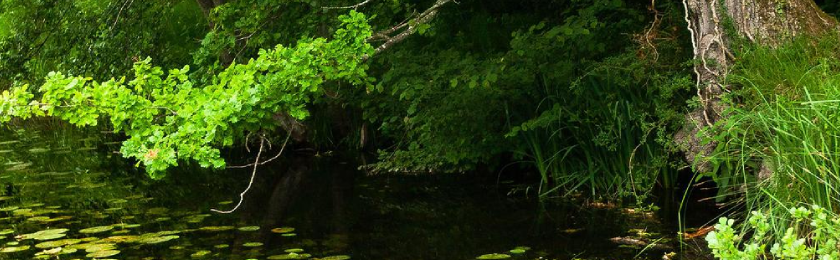
Across Belgium, wetlands and peatlands are being restored to hold water, protect carbon and revive biodiversity. Through partnerships with Natagora and Natuurpunt, the Candriam Institute is helping turn natural landscapes into practical responses to drought, flooding and a changing climate.
Despite its rainy reputation, Belgium has the highest baseline water stress in northern Europe.[1] According to Riparia’s 2026 briefing, Flanders is facing “extremely high” stress, withdrawing more than 80% of its renewable water supply each year, while Wallonia is in the “high” band at 40–80%. Dense population, intensive agriculture and limited surface area all squeeze supply. At the same time, the devastating floods of July 2021 showed that scarcity and excess can coexist. More recently, the August 2026 fires in the Hautes Fagnes, Belgium’s largest wildfire in a century, provided another stark illustration of the country’s growing exposure to climate extremes. More than 3,000 hectares of exceptional natural habitats were destroyed, including peat soils that can release carbon stored over millennia when they dry out and burn.
Belgium’s situation reflects a wider European challenge. The water crisis is not simply a question of too little water. Increasingly, it is also about water arriving at the wrong time, moving too quickly through altered landscapes or failing to replenish soils and groundwater. The European Environment Agency estimates that water stress affects around 30% of Europe’s land and 34% of its population each year, while climate change is increasing the risks of both drought and flooding.
In this context, wetlands are vital natural infrastructure. Marshes, wet meadows, peatlands and naturally functioning river valleys can slow and retain water, support groundwater recharge and reduce the severity of floods and droughts. They also filter water and provide habitats for specialised plants and animals. Peatlands add another essential function: when kept wet, their carbon-rich soils remain protected; when drained, stored carbon can be released into the atmosphere.
A Shared Challenge Across Belgium
Restoring these ecosystems requires local knowledge, long-term management and patient investment. This is where Natagora and Natuurpunt play complementary roles.
Natagora is a leading nature conservation organisation in Wallonia and Brussels. Supported by thousands of volunteers, it protects and manages a network of more than 6,200 hectares of nature reserves. Natuurpunt performs a similar role in Flanders and in Brussels, managing more than 30,000 hectares across 713 nature areas in 2025.
Through partnerships with these two organisations, the Candriam Institute for Sustainable Development supports practical restoration projects across Wallonia and Flanders as part of its Environmental Protection pillar. The work ranges from blocking drainage ditches and managing wet meadows to raising water tables and returning straightened rivers to a more natural course.
Natagora: Protecting Peat and Bringing Back the Bends
In Belgian Lorraine, the Institute supports Natagora’s management of five peat-rich reserves in the Semois basin. In 2025, Natagora blocked 1,700 metres of drainage ditches in the Plate Dessous les Monts and Petit Vivier reserves, preserving 100 hectares of peatland and wet meadow with the Institute’s support. Restoration also includes annual mowing of wet meadows and peatlands to help prevent these open habitats from becoming overgrown and preserve their characteristic biodiversity.
Further West, Natagora is helping the Eau Blanche recover its natural rhythm. Like many European rivers, it was straightened in the 1960s, accelerating the flow of water and reducing the variety of habitats along its course. The remeandering project reverses this process by giving the river back its curves. Natagora reports that around 20 meanders have been recreated between Aublain and Boussu-en-Fagne. By lengthening and slowing the river, the project creates a mosaic of fast-flowing, calm and shallow habitats. As a result, the river system is better able to respond to both intense rainfall and dry periods.
Watch the video
to discover more on the Eau Blanche project .
Natuurpunt: Raising Water Levels, Restoring Resilience
In Flanders, the Institute supports Natuurpunt’s wetland and peatland restoration in the Polders van Damme and the Grote Beek valley.
For the Damme polder project, the objective is clear: retain more water, protect peat soils and create suitable habitat for threatened species such as the black-tailed godwit, pink-footed goose and Eurasian bittern.
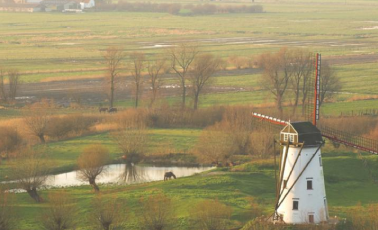
At Grote Beek, the objective is to remove small field ditches and make sections of the watercourse shallower so that the valley can hold water for longer.
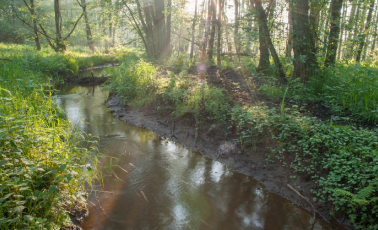
Natuurpunt estimates that the planned measures in two subareas could avoid approximately 158 tonnes of carbon-dioxide-equivalent emissions each year, and that the restored habitats should benefit species including the red-backed shrike, common snipe and large marsh grasshopper.
Turning Support into Long-Term Impact
Wetland restoration is a long-term commitment. Beyond visible actions such as restoring rivers or blocking ditches, success depends on careful planning, scientific monitoring and ongoing management over many years.
In 2025, the Candriam Institute donated over €530,000 euros for Environmental Protection. Its partnerships with Natagora and Natuurpunt are part of this wider effort to support practical, long-term environmental action on the ground.
Discover these projects and the full scope of the Institute’s work in its
2025 Annual Report.
Together, these projects show what it means to make space for water. By supporting the restoration of rivers, peatlands and wet meadows, the Institute is helping landscapes retain water, protect stored carbon and provide habitats for threatened species. Their full benefits will emerge over time, but their direction is clear: in a country increasingly exposed to both drought and flooding, working with nature is essential to building a more resilient future.